The LaCie 1TB desktop hard disk, designed by Neil Poulton, blends slick black design with generous storage for workstations and home entertainment systems. With USB 2.0, eSATA and FireWire 400 connections, it offers universal connectivity with your Mac.Plug & play capabilityTriple interface for universal connectivity on Mac/PCBlue LED for. LaCie PC/Mac lock - User Manual, Installation, Troubleshooting Tips, and Downloads.
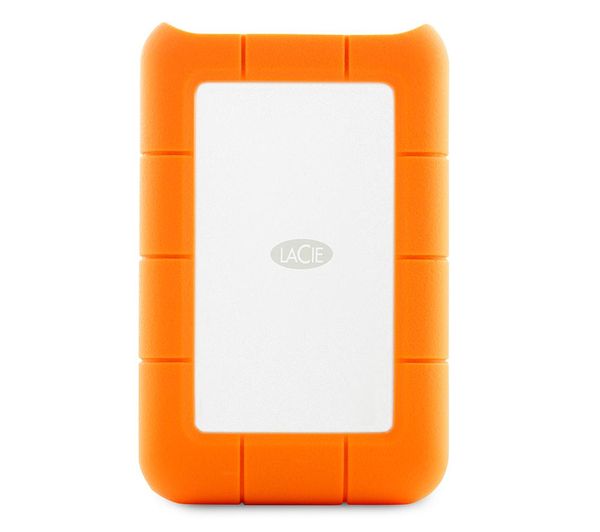
Lacie’s Rugged RAID Pro is an external portable RAID-enabled HDD that’s primarily aimed at photo and video editors who often find themselves on-the-go. Donning an unmistakable bright orange shock-resistant rubber sleeve, it fits right in with the Seagate-owned company’s other storage-centric options.
On paper, the Lacie Rugged RAID Pro won’t light up the scoreboards. Even in the RAID 0 performance mode, it features a rather pedestrian 250 MB/s max read speed. But where the drive lacks in speed, it makes up for in the sheer amount of storage offered — 4TB — stuffed inside a rugged chassis. It also comes with a feature that sets it apart from other bus-powered external drives on the market: a built-in UHS-II SD Card reader — extremely handy for MacBook Pro users.
Does the Lacie Rugged RAID offer enough to make it worthy of consideration? Have a look at our hands-on video review for the details.
Synology RT2600ac: The AirPort Extreme replacement.
Specifications
- 4TB RAID storage
- Pre-configured with RAID 0
- RAID 1 or JBOD configurations optional
- 250MB/s read speeds (RAID 0)
- Protective aluminum outer shell
- Drop, shock, crush, dust, and water resistant
- Bus-powered USB-C connectivity
- UHS-II SD Card reader with quick import
- Power supply with region plug attachments
- IP54 dust and water resistant cover
- Extra dust/water cover included
- Included heavy duty orange USB-C to USB-C cable
- Included USB-C to USB A cable
If you’ve used drives from Lacie’s rugged series before, you’ll notice that the company has omitted its integrated wraparound cable in favor of a detachable USB-C cable. This design decision has pluses and minuses. The upside is that users can easily swap out cables, and even utilize a legacy-friendly USB-C to USB-A cable (included) if necessary. That said, some users will miss the convenience of the cable integration, which means you’ll always have to remember to bring your cable with you when on-the-go.
Although the drive is capable of being bus-powered via USB, Lacie also includes a power adapter with various region plug attachments for powering the drive in case the computer’s bus doesn’t provide enough juice. However, for most Mac users, bus power via a USB-C connection should be a non-issue.
Lacie suggests installing its RAID Manager app and its Toolkit app for maintaining the Rugged RAID drive. Both of these apps feature macOS versions that can be downloaded from the company’s website.
Out of the box, the Rugged RAID Pro is formatted as ExFat for easy Windows and Mac compatibility. For Mac users, the Lacie Toolkit app suggests formatting the drive as HFS+, which I did before testing.
The Toolkit app comes with two primary functions: the ability to mirror specific folders stored on your Mac’s internal drive, and a quick import option for automatically copying SD Cards as soon as they are inserted into the drive.
Overall I found the Toolkit app to be a mixed bag. Some of the automatic imports completed successfully, but on more than one occasion, automatic imports failed. I also noticed that imports via Toolkit could be much slower than manually dragging and dropping the entire SD Card to the Lacie Rugged RAID Pro. Based on this experience, I recommend avoiding the Toolkit automation, and managing SD Card backups manually.
Because the drive lacks any hardware-based option for switching between RAID types, you’ll need to install the RAID Manager app if you wish to switch out of the default RAID 0 configuration. RAID Manager lets you easily switch to a more data secure RAID 1 config or even a JBOD config for utilizing the two internal hard drives as separate 2TB entities. Of course, RAID 1 or JBOD lack striping, which significantly reduces the read performance of the unit. For video workflows, such a change may have a real world effect on performance.
Since a reconfiguration will cause all device data to be deleted, Lacie built in a hardware confirmation switch that requires users to press a button on the front of the drive using a paperclip to confirm the configuration change. It’s an appreciated protection that just might save your data from accidental deletion.
To reach the advertised read performance of 250 MB/s, you’ll need to keep the drive configured as RAID 0. Speed tests with both Blackmagic Disk Speed Test and QuickBench confirm that the drive lives up to its billing. 250 MB/s is far from blazing fast, especially when you have external SSDs with USB 3.1 Gen 2 I/O interfaces, but it’s still fast enough for most 4K workflows using ProRes 422 HQ.
As you will see, RAID 1 configuration, which mirrors data between both internal drives to help keep your data safe, is the slowest of the three configurations. RAID 1 will also reduce the amount of available storage from 4TB to 2TB.
JBOD performance isn’t much better than RAID 1, but you don’t lose data to drive mirroring. RAID 1 configures each internal hard drive as two separate disks. There is no mirroring performed with a JBOD configuration, but the probability of failure isn’t as high as it is with RAID 0.
No surprises here. A decision must be made by the user to prioritize speed vs the chance that one of the drives in a RAID 0 configuration may fail. Although I’ve had good experiences with RAID 0 setups over the years, having never experienced a catastrophic failure resulting in data loss, I’m more willing to use such a configuration with SSDs, which feature no moving parts. Mechanical spinning disks are more prone to failure, which, in the case of RAID 0, would cause data loss across the whole array.
Lacie 15tb Reader For Macbook Pro
It’s sort of a catch 22, because the drive in a RAID 1 or JBOD configuration won’t be fast enough for certain video workflows. In the end you’ll have to balance the risk versus reward aspect of the drive. The good news is that Lacie is offering a three-year limited warranty with the Rugged RAID Pro, and also offers three years of rescue data recovery services with your purchase.
The most appreciated feature about this drive is its built-in SD Card reader with automatic card backup ability. If you’re constantly filling up SD Cards, then the Rugged RAID Pro, if nothing else, can be an awesome backup solution for your cards. If you’re not editing video directly off the drive, then it doesn’t really matter how slow RAID 1 is if you’re using it primarily for backups.
If you’re a MacBook user, then the SD Card reader is a great feature, because it eliminates the need to carry around a dedicated SD Card dongle. The SD Card Reader on the Rugged RAID Pro is also UHS-II enabled, allowing for faster data transmission with modern SD Cards like Sony’s G-Series lineup.
Adobe Acrobat Reader For Mac
The other big appeal of the drive is its sheer ruggedness. Lacie says that the Rugged RAID Pro can withstand being run over by a 1-ton car, and is protected from limited dust ingress and water spray from any direction. If you’re a photographer or videographer that’s constantly out shooting in the elements, then the Lacie Rugged RAID Pro, available from B&H and from Amazon, may be a viable solution for your workflow.
The main downside of the Rugged RAID, besides the obvious fact that it’s still using two spinning mechanical disks, is that the Toolkit software aimed at automating the SD Card backup process can be slow and finicky. You’d be better off manually managing SD Card backups instead of trying to rely on the automated software.
In a world of speedy external SSDs, the Rugged RAID Pro is far from the fastest drive on the block, but it has appealing qualities. Its ruggedness, storage space, and inclusion of a fast SD Card reader are all features that I really like as a video and photo shooter. Does the idea of having a built in SD Card reader on an external USB-C-equipped drive appeal to you? Sound off in the comments with your thoughts.
Other external drives we’ve reviewed
Windows can’t normally read Mac-formatted drives, and will offer to erase them instead. But third-party tools fill the gap and provide access to drives formatted with Apple’s HFS+ file system on Windows. This also allows you to restore Time Machine backups on Windows.
If you know you’re going to use a drive on both Mac and Windows, you should use the exFAT file system, which is compatible with both. But if you didn’t foresee that, you may have formatted your drive with Apple’s HFS Plus, which Windows can’t read by default. In fact, some manufacturers sell “Mac” drives pre-formatted with this Mac-only file system.
Don’t Format the Drive! (Yet)
When you connect a Mac-formatted drive to Windows, you’ll be informed that “you need to format the disk in drive X: before you can use it.” Don’t click the “Format disk” button or Windows will erase the contents of the drive–click “Cancel”!
This message appears because Windows doesn’t understand Apple’s HFS+ file system. That’s fine, because other applications do. Just don’t format the drive until you get the important files off the drive.
Of course, if the drive doesn’t have any important files on it, you can go ahead and format it. But be absolutely sure there’s nothing you need before you do.
Option One: HFSExplorer Is Free and Basic
RELATED:How to Restore Files From a Time Machine Backup on Windows
If you only need to get a couple files off the drive, we recommend HFSExplorer. It’s the only completely free way to access a Mac-formatted drive. It does require Java, however, so you’ll have to install that first. Then, install HFSExplorer like you would any other Windows program.
HFSExplorer isn’t fancy, though, and doesn’t have a lot of features. You can’t use it to write to Mac-formatted drives, and it doesn’t install a file system driver that integrates into File Explorer. But you can open HFSExplorer, read a Mac-formatted drive, and copy the files to your Windows PC without paying a dime. It can also mount Mac .dmg disk images to get at the files inside them.
This application’s read-only nature isn’t necessarily a bad thing. It ensures that no bug in the third-party driver can damage your Mac-formatted drive and the files on it. You can set read-only mode in other applications, too–but, if you’re not going to use their write support, there’s less reason to pay for them.
To use HFSExplorer, connect your Mac-formatted drive to your Windows PC and launch HFSExplorer. Click the “File” menu and select “Load File System From Device.” It will automatically locate the connected drive, and you can load it. You’ll see the contents of the HFS+ drive in the graphical window. Just select the files or folders you want, click “Extract,” and choose a folder. They’ll be copied to the location you choose on your PC.
Option Two: Paragon HFS+ is $20, But Offers Write Access and Better Integration
Paragon’s HFS+ for Windows is a bit fancier, but it’ll cost you. This tool installs a file system driver that allows you to access a Mac-formatted drive like any other drive in File Explorer, or any other Windows application with an open or save dialog. It boasts improved speed, and we wouldn’t be surprised if it were faster than HFSExplorer. And, unlike HFSExplorer, it offers full read/write access to Mac-formatted drives, so you can write to them from within Windows. Just install it, and Mac drives will show up like any other drive.
If you need to work with Mac-formatted drives on a regular basis and you want the operating system integration, speed, and write access, Paragon HFS+ is a great choice and will be worth it for you. But, if you just need to get some files off a Mac-formatted drive occasionally, this is overkill and you can save $20 by sticking with HFSExplorer.
Lacie 15tb Reader For Mac
Paragon does offer a 10-day free trial of HFS+ for Windows, so you can give it a try and see if it works for you. And, if you just need to get files off of a Mac-formatted drive once, you can just use the trial and be done with the application by the time it expires.
Option Three: Mediafour MacDrive Costs $50 to $70, But Includes More Features
Mediafour’s MacDrive is similar to Paragon’s HFS+ for Windows, but with more features and polish. It’s noticeably more expensive than Paragon HFS+ too, at $50 for the Standard version and $70 for the Pro version.
For most people, this software won’t really be worth it. But it offers a few unique features, like support for Mac-formatted RAID disks. It also offers a graphical interface with support for verifying, repairing, and formatting Mac-formatted drives. Paragon’s HFS+ gets out of your way and doesn’t provide a graphical interface–it just enables access to HFS+ drives in File Explorer and other applications.
If you need all these tools, go for it–this is the most full-featured solution for working with Mac-formatted drives on Windows. But you probably don’t need all these tools.
Mediafour does offer a 5-day free trial of MacDrive–both the Standard and Pro versions–so you can give it a try and see if those features are worth it for you.
Option Four: Format the Drive as exFAT–But Warning, This Will Erase Your Data!
Acrobat Reader For Mac
RELATED:What’s the Difference Between FAT32, exFAT, and NTFS?
Once you’ve gotten all the data off the Mac-formatted drive, you’ll probably want to format it with the exFAT file system. Both Windows and Mac OS X have full read-write support for exFAT drives without any additional third-party software. FAT32 has some serious limitations–individual files can only be up to 4GB in size each, for example–but exFAT doesn’t.
Adobe Reader For Mac
Rather than use a Mac-formatted drive, you should get the important files off of it and use exFAT-formatted drives for moving data between Macs and PCs.
To format the drive in Windows, right-click it in the File Explorer window and select “Format.” Choose the “exFAT” file system in the list and click “Start.” Remember, this will erase all the files on the drive! Be absolutely sure you have your files off the drive and that you’ve selected the correct drive you want to format!
When you’re done, the drive should work on both Windows PCs and Macs with no problem.
By the way, this works great for Windows users too–Macs can’t natively write to the Windows NTFS file system, although they can read files from NTFS drives. So no matter what your primary platform, exFAT is probably the way to go.
READ NEXT- › How to Use Pipes on Linux
- › Why Does USB Have to Be So Complicated?
- › What Should You Do If You Receive a Phishing Email?
- › Why Do You Have to Log In to Your Home PC, Anyway?
- › The Best New Features in Android 10, Available Now