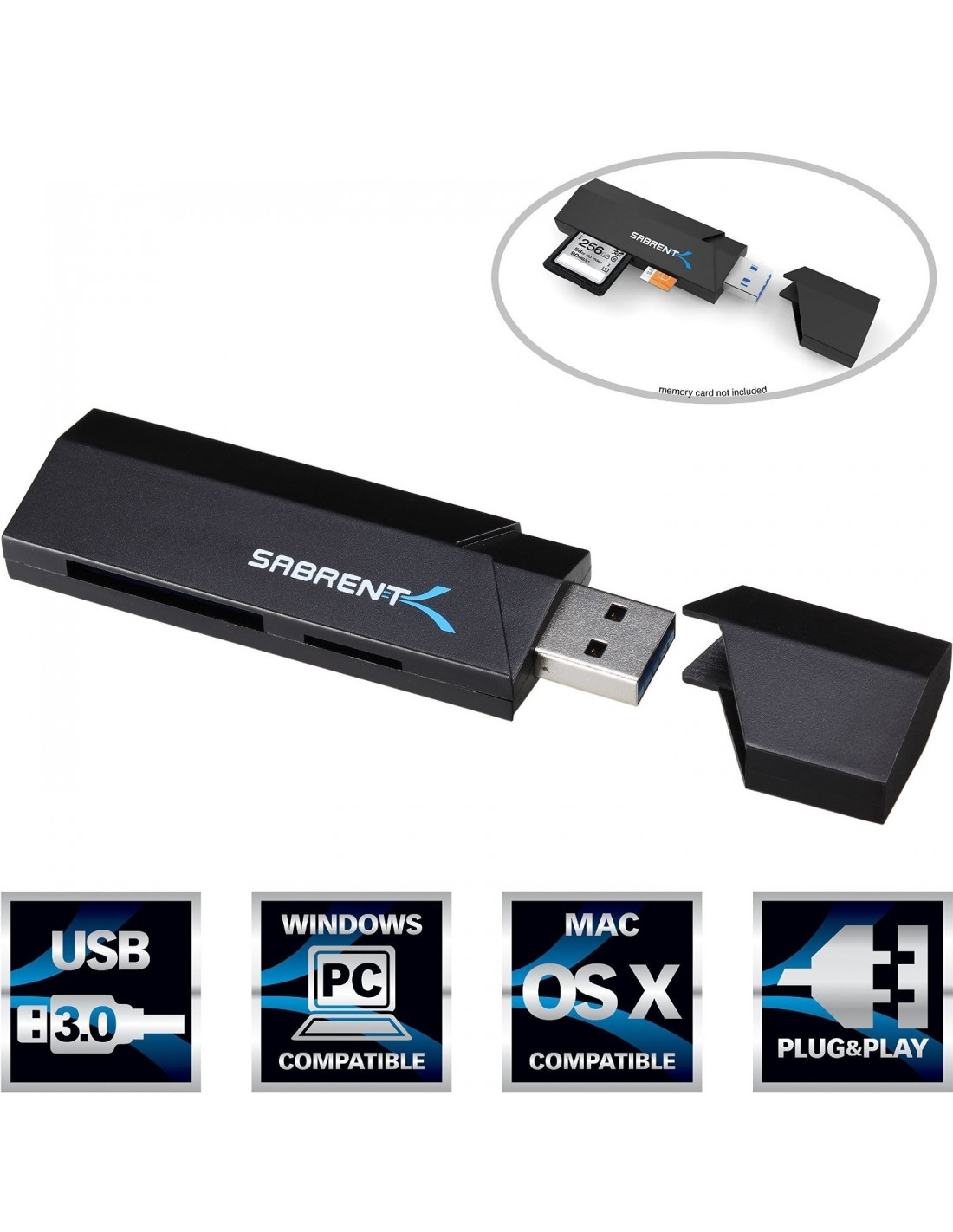
The MacBook Pro comes with a built-in SD card reader, so you can insert compatible SD cards and view their contents using the Media Reader. The cards must conform to SD 1.x, 2.x, and 3.x standards. SmartMedia Card Reader Writer All-in-1 USB Universal Multi Card Adapter Slim Hub Read Smart Media, xD, SD, SDHC, SDXC, UHS-I, MMC, MS Pro Duo, CF, MD, Camera Flash Memory Cards For Windows, Mac, Linux.
Summary
Does your SD card fail to read or open on your computer? Here are proven ways on how to fix the 'computer cannot read the SD card' error step-by-step. If you worry about a data loss disaster, try EaseUS Data Recovery software to rescue your files by following these simple steps.
Many users are complaining that their SD card always worked fine, but suddenly cannot read or open on their computer and are asking for help online. Here’s a real story of a user from the Microsoft community:
'Today I've been trying to use my Toshiba SD card on my laptop, but the computer won't recognize it. Nothing comes up on my computer or anything. Any idea on how to fix it?'
If you are suffering from the same issue and worrying about the unreadable SD card, you are in the right place. We provide tried-and-true solutions to fix the issue without data loss.
Part 1: Recover Data When the Computer Cannot Read or Open SD Card
Before you get down to fix the 'SD card not opening' issue, you should recover data first to avoid further data loss. How to recover your data? now EaseUS disk data recovery software can help! After data recovery, you can go to Part 2 to learn how to repair a Micro SD card that can't be read.
When you find your SD card can't be read on your computer, right-click This PC --> choose Manage --> select Disk Management. Check if the memory card is listed there. If yes, EaseUS Data Recovery Wizard can help you retrieve your valuable data by following a few simple steps.
Stop using your SD card immediately once you lost files on it. Continuing using the card would hugely increase the chance of data overwriting, which makes data unrecoverable.
Step 1: Connect the SD card to PC
Insert the SD card to a card reader, and connect the card reader with your SD card to a healthy computer.
Step 2: Run SD card recovery software and scan the card.
- Launch EaseUS Data Recovery Wizard on your PC and select your SD card under theExternal Devices column.
- Then click Scan to start finding lost data on your SD card now.
Step 3: Check found SD card data.
After the scanning process, you can preview and find your lost SD card files from below listed tabs:
- Deleted Files: List your deleted files there.
- Drive X: All lost files can be found here.
- Lost Partition Files: Check first if it's for formatted recovery.
- Extra Files: Finds files that lost names or paths.
And you can use Filter and Search to quickly find your files.
Step 4: Restore SD card data.
- You can check and preview found files by double-clicking each one of them.
- Then click Recover to save found SD card files to a secure location on your PC or an external storage.
Part 2: Fix SD Card Won't Read or Open on My Computer
After retrieving all your data, you can fix the 'SD card can't be read or opened on the computer' issue step by step.
1 - Not Opening SD Card Becomes RAW
Your SD card can be recognized under Disk Management, but it's inaccessible. That is to say, the device becomes RAW. You can fix it through two ways - use CHKDSK or format the SD card.
① Run CHKDSK to Fix SD Card Not Reading (Fix the File System Error)
If the SD Card is detected but cannot open, run CHKDSK to scan for errors!
- Step 1: Connect the SD card to PC via an SD card reader.
- Step 2: At the start, type cmd and right-click Command Prompt. Click 'Run as administrator'.
- Step 3: Type 'chkdsk h: /f'. Replace h with your SD card drive letter.
After this, you can try again to see whether you can open it or not. If not, format the SD card.
② Format the SD Card (Can Also Solve Lost Partition Issue)
SD card can be recognized under Disk Management, but it's inaccessible or the partition is lost. SD card formatting can solve it easily:
- Important
- SD card formatting will cause data loss. Recover data from formatted SD card if you want to get back important data.
- Step 1: Connect the SD card to your PC. Right-click on This PC/My Computer, select 'Manage'.
- Step 2: Click 'Disk Management', locate and right-click the SD card, then choose 'Format'.
- Step 3: Select wanted file system for the SD card and click 'OK' to confirm.
2 - SD Card Shows No Media
If your SD card shows 0 bytes in Disk Management, you'll need to take your device to a local data recovery service center and ask for help.
But you can still try to update the drivers to fix it. Most users say it works.
- Step 1: Connect the SD card to PC. Right-click on 'This PC/My Computer' icon, select 'Manage' and go to 'Device Manager'.
- Step 2: Expand 'Disk drivers', find and right-click on the no media sd card, choose 'Update driver'.
- Step 3: Select 'Search automatically for updated driver software' and wait patiently till the process completes.
3 - SD Card Showing as Unallocated
If the device is showing as unallocated, the computer certainly cannot open the sd card. For this case, things could be easier. All you have to do is create a new volume for the SD card. The steps below are manual steps. If you prefer to using the software, refer to this page - create a new partition using the software
- Step 1: Connect the unallocated SD card to PC. Right-click on This PC/My Computer > Manage > Disk Management.
- Step 2: Locate and right-click on the unallocated space of the SD card, select 'New Simple Volume'.
- Step 3: Set partition size, drive letter and file system (NTFS), etc. Click 'Finish' to complete the process
4 - Other Fixes for SD Card Won't Read Issue
- If the SD card partition doesn't show up in Disk Management but can be found in Device Manager:
① Update the SD card driver
② Change SD card reader, adapter or USB port
- If both the Device Manager and the Disk Management cannot recognize your SD card:
① Send it to a local device repair center
② Give up this SD card and buy a new one
That's all about how to fix the 'SD card won't read or open' issue.
So. Like many OS X users, we love OS X, but there's that 1 app that we have to use for either work/entertainment/etc that makes us go back to Windows. For me, I need Windows for my Visual Studio App Testing Dev Environment. Some like me, who don't like having to share the OS X with the Windows on our limited SSD drives. Found a solution that was out there, but isn't really talked about because of it's complexity. Its still complex, but I simplified the steps as best as I can. I know most average users wont try this, but I just wanted to put this out there for those who would like to try.
My Windows:http://imgur.com/a/h5Mq1
I am currently running it on an 128GB Samsung EVO+ 25MB/s Write and 80MB/s Read. 2013 Macbook Air (8GB RAM)
I love OS X(macOS)/Linux because installing it on an USB hard drive is exactly how you would install it on your system drive. On Windows, you get an error.
Warning: What ever storage medium you use, it will require the whole drive. So backup what ever is on that drive to another system. It will wipe your USB Drive/SD Card completely (That means all partitions of the USB Drive/SD Card).
Limitations:
1.Full Windows 10 is installed, but it runs as if its Windows To Go. You can install and run apps and most likely do what you can on Windows 10. (So far, the only limitation I found is the major update issue in the 2nd limitation)
Windows To Go Info:https://technet.microsoft.com/en-us/library/hh831833(v=ws.11).aspx
2.You cannot update your system if there are major updates like Windows 10 to WIndows 10.1. (This is a very weird issue by Windows)
3.For SD Card Installations (Highly Not Recommended). It's expensive, limited performance, and limited writes. You might kill your SD card really fast running an OS on it. Make Sure your card can at least do 25MB/s Writes and 48-80MB/s Reads. I recommend SD Cards with 90+MB/s Reads and 90+MB/s Writes. Limitations for SD cards are that you can only do one thing at a time or your system will lock up when you are using it.
Required:
1.Windows 7/8/10 .iso/DVD
2.Windows 7/8/10 installed machine or Virtual Machine
3.An empty USB Hard Drive or SD Card (Minimum Size 32GB).
4.WAIK Files: https://drive.google.com/open?id=0BxzOvp663NFveWRyN2RlQXNweDg (If you know a better site that can I can upload it and store it forever, please leave a comment below)
WAIK = Windows Assessment and Deployment Kit
On the Windows installed Machine:
USB/SD Card Drive Preparation:
Simultaneously click Windows Key+R (CMD+R for Mac Keyboards)
Type cmd and click enter.
Type diskpart and enter. Click Yes for the User Account Control prompt.
Type list disk and click enter. Make sure you know your 'Disk ###' of the USB drive you plan on installing Windows on.
Type 'Select Disk #'(Replace '#' with the number of the USB drive you plan on installing your Windows on)
Type 'clean' and then enter.(This will wipe all contents of the disk you selected)
Type 'create partition primary' and then enter.
Type 'list partition' and then enter. (Make sure there is only 'Partition 1' listed)
Type 'select partition 1' and then enter.
Type 'format fs=ntfs quick' and then enter. (This might take a while based on disk speed and size).
Type 'assign letter=Z' and then enter.
Type 'active' then enter.
For people installing on SD cards And/Or to ensure it has been formatted properly
13. Go to 'This PC'(For Windows 8/10) or 'My Computer'(For Windows 7)
14. Right Click the SD Card (Should be Drive Z) and select Format.
15. For File System: Select NTFS. For Allocation Unit Size: Select 512 Bytes(for SD cards) or 'Default Allocation Size' for USB Drives. Make sure Quick Format is 'Checked'. Then click 'Start'
Installation Steps:
Insert your DVD or open you .iso(for Windows 7 you will have to extract it and for Windows 8/10 if you double click the .iso file, it should appear as a dvd drive in 'This PC')
Download the WAIK Files.zip on a Windows installed System.
Do a Virus Scan on the zip. (Optional, but recommended.)
Extract the WAIK Files.
Open the WAIK Files Folder and right click 'installer.cmd' and click 'run as administrator'
Hit 'Enter' until a dialog box opens. (Should be about twice).
In the Dialog Box. Go to your Windows Installation Drive. Open the 'sources' folder. Select 'install.wim'. Then hit ok.
Select which Windows Version you would like to install and hit enter. Your input should be a number '0-9'
Select which drive you would like to install it on. Your input should be a letter A-Z. (Based on this tutorial, your input should 'Z') and hit enter.
Select which drive you would like to install it on again. Your input should be a letter A-Z. (Based on this tutorial, your input should still be 'Z')
When it asks you 'is this a usb drive'. Type 'Y' and hit enter.
Hit enter again. Until you see a progress notification in '%'. (Progress may take up to 2-3 hours based on the write speed of your disk)
After its completed (It will notify you to restart your computer). Close the program. Eject the USB Drive/SD Card and connect your USB Drive/SD Card on the computer you want to run Windows on.
On your Macbook:
You Mac should be off. Turn on your Mac and immediately hold option. Select the Drive that says 'Windows'. (You should see a blinking cursor on the left screen for about 1-5 min. If it takes longer than that, something went wrong with the previous steps. Try doing it again, but if it doesn't work the 2nd time, it won't work at all.)
Let Windows install. (It will restart a couple of times and you will have to repeat step 14).
Once you go through all the Windows Questions and you are in Windows. You are done Installing Windows.
4.In order to boot into your Windows Drive. You will have to do Step 14 every time.
Installing Boot Camp Drivers:
In order to get the boot camp drivers. You will have to boot into OS X/macOS.
Open Boot Camp Assistant.
In the Menu Bar click 'Action'. Then click 'Download Windows Support Software'
Save to your Desktop. (Its around 3-4 GB). So based on your internet speed, it might take a while.
When its done, the windowssupport folder will appear on your desktop. Copy the folder to a flash drive.
Shut down. Turn on your computer and hold option immediately. (If you see two or more Windows drives, pull all your USB drives out except your Windows USB Drive. Then click the windows drive.
When booted open the flash drive with the windowssupport folder and install Boot Camp Drivers regularly.
For Those Using External SSD's(I.E. Samsung T3). This is very important to you.(TRIM Support)
Easier Tutorial (Untested, but Possibly Working)
Easier way of installing windows on an external drive
Requirements:
-Spare Desktop Windows 7,8,10 PC (If your motherboard is UEFI, you must change to LEGACY in BIOS)
-2.5' Bare Hard Drive/SSD
-2.5' USB 3.0 Hard Drive Enclosure (USB 2.0 will also work, but performance will be around 30-40% slower, maybe more)
-Windows 10 ISO (I haven't Tested 7,8)
-8GB USB Thumb Drive/SD Card
Steps:
1.You will have to open your Spare Desktop PC and connect the 2.5' Bare Hard Drive to the Motherboard and Power Supply.
2.Turn on your Spare Desktop PC and boot into Windows.
3.Download Windows USB/DVD Download Tool https://www.microsoft.com/en-us/download/windows-usb-dvd-download-tool
4.Install the Windows USB/DVD Download Tool.
5.Plug in your USB Drive/SD Card and open Windows USB/DVD Download Tool and follow the steps. (Will require you to select the Windows 10 ISO). WARNING IT WILL FORMAT AND CLEAR ALL THE CONTENT ON THE USB DRIVE/SD CARD YOU SELECT. MAKE SURE TO BACKUP ANYTHING ON IT.
6.Restart Your PC and boot into your USB/SD Card.(Usually one of the F keys i.e. F1, F2,...)
7.Go through the installation process and make sure to install on the 2.5' Bare Hard Drive you installed.
8.After the installation and you boot into the windows installation on the 2.5' Bare Hard Drive, shut down the PC and remove the 2.5' Bare Hard Drive and install it in the 2.5' Enclosure.
Download Sd Card Reader For Windows 7
9.Plug USB Enclosure into the MacBook via the USB Cable.
10.Hold Option and then boot on your MacBook. Select the Windows Drive. (If you can't see the Windows Drive, you will have to mark the partition on the drive active in Windows using the Spare PC. http://macrorit.com/partition-magic-manager/set-active-partition-diskpart-command-line.html)
11.It will go through the Getting Devices Ready process again and boot you into Windows on your Macbook on an external drive.
Mac Sd Card Reader Not Working